Experience Details
The Everest Base Camp Trek is one of the world’s most iconic trekking adventures, drawing thousands of trekkers every year to the foot of the tallest mountain on Earth — Mount Everest (8,848.86 meters). This exhilarating journey is not only about reaching Everest Base Camp, but about immersing yourself in the breathtaking landscapes, vibrant Sherpa culture, and spiritual essence of the Khumbu region. Whether you're a seasoned trekker or a passionate traveler seeking adventure, this trek is a life-changing experience that connects you deeply with nature, culture, and your inner self.
Highlights of the Everest Base Camp Trek
- Scenic flight to Lukla – Begin your adventure with a thrilling mountain flight offering panoramic views of the Himalayas.
- Namche Bazaar – Explore the bustling Sherpa capital and acclimatize while soaking in views of Everest and Ama Dablam.
- Tengboche Monastery – Visit one of the most important Buddhist monasteries in the region, with a dramatic mountain backdrop.
- Kala Patthar Viewpoint (5,545m) – Witness a spectacular sunrise over Mount Everest and the Khumbu glacier from the best viewpoint on the trail.
- Everest Base Camp (5,364m) – Stand at the base of the world’s highest mountain, surrounded by majestic icefalls and snow-capped peaks.
The Journey Begins: Flight to Lukla
Your Everest adventure begins with a thrilling mountain flight from Kathmandu to Lukla (2,860 meters), one of the most famous high-altitude airports in the world. The short flight offers stunning aerial views of the Himalayas and marks the gateway to your trek. Once you land in Lukla, the trek officially starts. You’ll gradually ascend through charming villages, dense forests, suspension bridges, and river valleys toward higher altitudes.
Sherpa Villages and Local Culture
As you hike through villages like Phakding, Namche Bazaar, Tengboche, Dingboche, and Lobuche, you’ll witness the warm hospitality and rich traditions of the Sherpa people. Known for their resilience and deep connection with the Himalayas, the Sherpa community has preserved centuries-old Buddhist practices and mountain traditions. Prayer flags flutter above stone-paved trails, and colorful mani walls and chortens line the route, infusing a spiritual rhythm into your journey.
Namche Bazaar, the bustling trade center of the Khumbu region, is an acclimatization stop where trekkers can explore local markets, bakeries, museums, and panoramic viewpoints. You can also visit the Everest View Hotel, one of the highest luxury hotels in the world, for a remarkable view of Everest, Ama Dablam, Thamserku, and more.
Acclimatization and High-Altitude Challenges
Trekking to Everest Base Camp is a physical and mental challenge. The trail ascends steadily, and altitude acclimatization is crucial. Days are carefully planned with rest and slow ascents to help your body adjust to thinner air. Acclimatization stops at Namche Bazaar and Dingboche allow you to hike to nearby viewpoints while preparing for higher elevations.
Despite the challenges, the rewards are immense. Each day brings you closer to your goal while offering majestic views of the towering Himalayan peaks, including Lhotse, Nuptse, Pumori, and Everest itself.
Everest Base Camp and Kala Patthar
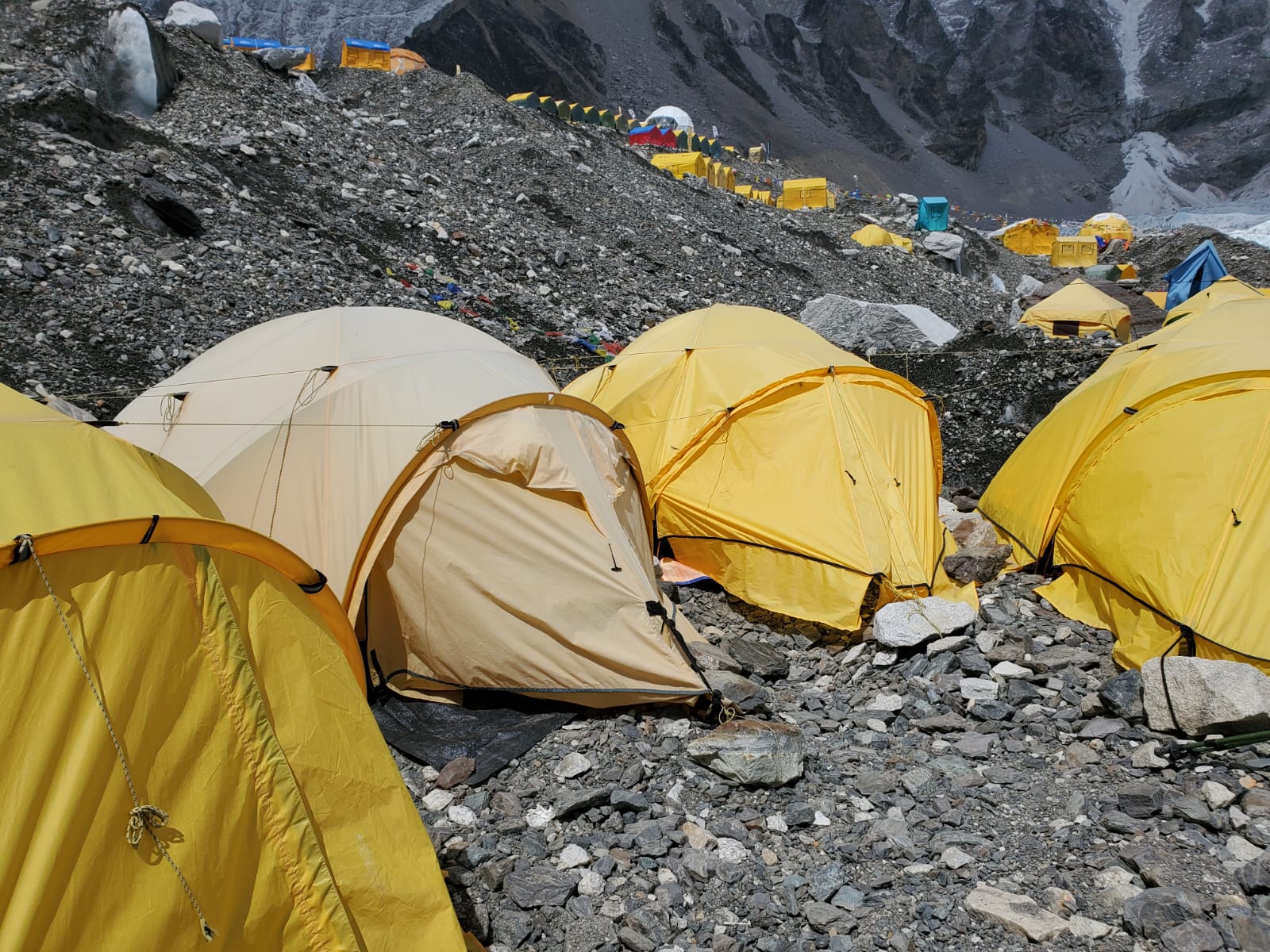
Reaching Everest Base Camp (5,364 meters) is a moment of triumph. You stand where countless mountaineers have begun their ascent to the top of the world. The base camp offers dramatic views of the Khumbu Icefall, glacier formations, and the sheer scale of the Himalayan wilderness. While Everest itself is not fully visible from the base camp, your trek is far from over.
The next morning, an early hike to Kala Patthar (5,545 meters) gives you the most iconic view of Mount Everest, glowing in the morning light. This is the highest point of the trek and arguably the most spectacular. Watching the sun rise over the world's tallest mountain is a moment that leaves many speechless.
Return Journey and Reflections
The return trek follows the same trail back through the Khumbu valley. As you descend, oxygen levels increase, and your body begins to recover. The journey back allows time to reflect on the physical challenges you’ve overcome, the friendships you’ve built along the trail, and the beauty of a land that feels both otherworldly and deeply spiritual.
Best Time for Everest Base Camp Trek
The best seasons for the Everest Base Camp Trek are spring (March to May) and autumn (September to November). These months offer stable weather, clear skies, and ideal trekking conditions. Spring brings blooming rhododendron forests, while autumn offers crisp mountain air and excellent visibility.
Trek Duration and Difficulty
Most Everest Base Camp treks last between 12 to 14 days, depending on the itinerary and pace. While no technical climbing is involved, the trek is considered moderate to strenuous due to the high altitude and long walking days. With proper acclimatization and a steady pace, most reasonably fit individuals can complete the trek successfully.
Teahouse Experience and Mountain Comfort
Along the trail, trekkers stay in local teahouses—simple mountain lodges run by Sherpa families. While amenities are basic, the warmth of the hosts, nourishing meals, and cozy dining halls make the experience special. Sipping hot tea by the fire while swapping stories with fellow trekkers from around the world is one of the many joys of the journey.
Why Trek to Everest Base Camp?
- Walk in the footsteps of legends like Sir Edmund Hillary and Tenzing Norgay.
- Experience unmatched views of the Himalayas.
- Immerse in Sherpa culture and Himalayan spirituality.
- Challenge yourself in a high-altitude environment.
- Create unforgettable memories in one of the most beautiful places on Earth.
Conclusion: Everest Base Camp Trek
The Everest Base Camp Trek is not just about reaching a destination — it’s a journey into the heart of the Himalayas that leaves a lasting impact on your soul. From scenic flights and dramatic landscapes to sacred monasteries and welcoming Sherpa hospitality, every step brings a new experience and a deeper connection with nature and yourself.
If you're looking for a true adventure, one that tests your spirit and rewards you with the most awe-inspiring views on the planet, trekking to Everest Base Camp should be on your bucket list. This trek is more than a trail—it’s a pilgrimage to the top of the world.
Location
translate Languages
warning Restrictions
Booking Cancellation Terms
We understand that travel plans may change unexpectedly. Our cancellation policy is designed to be as fair and flexible as possible for our clients.
Cancellation by the Client
- More than 30 days before departure: 80% refund of total trip cost (20% non-refundable deposit retained).
- 15 to 30 days before departure: 50% refund of total trip cost.
- 7 to 14 days before departure: 25% refund of total trip cost.
- Less than 7 days before departure or no-show: No refund will be provided.
Cancellation by the Company
- If we must cancel a trip due to unforeseen circumstances such as political unrest, natural disasters, insufficient bookings, or other force majeure events:
- You will be offered an alternative trip of equal value, or
- A full refund of the trip cost (excluding any transaction or booking fees) will be provided.
Non-Refundable Charges
- Flight tickets, permits, or other third-party bookings are subject to the provider’s cancellation policies and may be non-refundable.
- Bank and transaction charges are non-refundable.
Trip Alterations
- Changes to your booking (such as date changes) can be made up to 15 days before the start of the trip, subject to availability and administrative costs.
Health & Safety
- The client confirms they are physically fit for the trek.
- The company reserves the right to alter the itinerary due to weather, safety, or unforeseen circumstances.
- In case of illness or emergency, evacuation will be arranged at the client’s expense unless covered by insurance.
Travel Insurance
- The client is responsible for securing adequate insurance covering high-altitude trekking, emergency evacuation, and medical treatment.
Liability Waiver
- While all safety precautions are taken, the company is not liable for personal injury, loss, or damage during the trek unless caused by gross negligence.
Agreement to Terms
By signing below, both parties confirm they understand and agree to the above terms.
Cost Include
- Round-trip airport transfer
- Hotel in Kathmandu: 3 nights, twin sharing basis in BB plan
- Kathmandu World Heritage sightseeing tour guide and transport
- All necessary trekking permits and documentation.
- Domestic flight ticket from Kathmandu to Lukla and return to Kathmandu
- Trekking Guide: English-speaking, helpful, and professional
- Trekking Porter (One porter for 2 members)
- Meals: (14 breakfasts, 11 lunches, 11 dinners)
- 11 nights twin sharing lodge to lodge accommodations during trekking
- Achievement certificate provided by your travel company in Kathmandu
- Arrangement of Emergency Helicopter service, which will be paid by the Travel insurance company.
- Medical supplies (first aid kit will be available
- All government taxes and service charges.
Cost Exclude
- International flights,
- Nepal entry visa fee,
- Travel and rescue insurance. Insurance should cover rescue evacuation,
- International airfare,
- Lunch and dinner in Kathmandu,
- All bar bills and personal expenses(phone calls, laundry service, battery recharge, bottles of water, hot water, etc.)
- Tips for the guide and porter
Day 01: Arrival in Kathmandu (1,350m/4,429ft)
Reception at the Kathmandu by the representative of Nepal Trekking Routes on the arrival day. Then, transfer to the hotel booked for your lodgings. After becoming fresh, you can visit the nearby areas from the hotel.
Day 02: Kathmandu Valley Sightseeing and Trek Preparation
After breakfast, the tour guide takes you around the UNESCO World Heritage Sites of the Kathmandu Valley. Patan Durbar Square, Swayambhunath Stupa (the Monkey Temple), Pashupatinath Temple and Bouddhanath Stupa will be visited. In case of mutual understanding, you may also visit other sites: Hanuman Dhoka Durbar Square, Bhaktpaur Durbar Square and Changunarayan Temple as well. In the evening, the trekking guide gives you briefing about Everest Base Camp trek itinerary.
Day 03: Fly to Lukla (2,860m/9,383ft) and Trek to Phakding (2,610m/8,563ft)
After breakfast, the private jeep transfers you to Kathmandu Airport. In a morning flight, you fly from Kathmandu to Lukla, Tenzing Hillary Airport. During the 30-minute flight, you have an aerial view of the snowcapped peaks and wonderful landscapes. The mountains from the Manaslu region to the Kanchenjunga region come into your sight in this journey.
After landing at Lukla, the gateway to EBC trek, you move forwards through pine, cedar, and rhododendron forests. You have to cross Cheplung Village from where you can enjoy Mt. Khumbila (5,761m). Along the Dudh Koshi River Valley, you measure the trekking trails up to Phakding.
Day 04: Trek to Namche Bazaar (3,440m/10,958ft)
Today, you move further by following the trail that goes northwards up to the Benkar Valley. When you cross the Dudh Koshi River, the trail moves past Chumoa and Monjo Village. You get your Sagarmatha National Park Entry Permit at Monjo as it is the entrance to the highest placed national park in the world.
Then, you go across the Hillary Suspension Bridge and Jorsalle Village walking along the Dudh Koshi and the Bhote Koshi River. Afterward, walking through the steep trail going through Sagarmatha National Park, you reach Namche Bazaar. Namche Bazaar is the largest trading center of the whole Khumbu region, so it is known as the Sherpa Capital as well. The town offers you all the modern amenities like banks, ATMs, hotels, bakeries, restaurants etc.
Day 05: Acclimatization Day around Namche
To be introduced with the climate of the high Himalayan altitude, you have a few things to do here at Namche Bazaar. You can visit the Sherpa Museum to know all about the Sherpa lifestyle, customs and costumes. Similarly, the Hall of Fame shows you the photos of Hillary and Tenzing from the 1953 Everest Expedition. Next, you can also hike to Everest View Hotel, which is the world’s highest altitude hotels. From the hotel, you can see Mt. Everest and other peaks exposed in the fullest.
Alternatively, you can visit Sagarmatha National Park to have the stunning view of Mt. Everest, Mt. Lhotse, Nuptse, Ama Dablam, Thamserku, Kongde and many more. Moreover, you can also go to Khumjung Village to observe the Hillary School and the Yeti Scalp.
Day 06: Trek to Tengboche (3,860m/12,664ft)
Measuring the rugged trail, you move towards Tengboche enjoying the gurgling water of the Dudh Koshi River and astounding mountain scenery. Walking through the winding track for about 5 hours taking enough rest, you reach the destination. Tengboche Village houses the largest monastery of the Solukhumbu region.
You can visit this monastery, and talk to the monks living there to get insight about Buddhist culture and tradition. When you plan Everest Base Camp trek in November, you can observe Mani Rimdu Festival, the greatest festival of the Sherpa people at this monastery premises.
Day 07: Trek to Dingboche (4,410m/14,469ft)
The trail from Tengboche to Dingboche moves across yet another suspension bridge over the Imja Khola. By crossing the trail surrounded and beautified by numerous mani stones, you reach Pangboche. Here, you can visit Pangboche Monastery, which is the oldest in the Khumbu region of its type. Moving ahead along the steep trail, you reach Dingboche, a traditional Sherpa Village of Everest region. Apart from Sherpa culture and tradition, you can relish the awe-inspiring outlook of Mt. Lhotse, Island Peak and Mt. Ama Dablam.
Day 08: Acclimatization Day at Dingboche
This is another acclimatization day during trekking to Everest Base Camp. In the morning, you can hike to Nagarjun Hill (Nangkartshang Peak: 5,073m) if the weather is favourable. Although the trail to the peak is quite challenging, the view is really rewarding. You can have the top- to- bottom- glimpse of Mt. Ama Dablam (6,812m) from the top. In the daytime, you can stroll around the village, which is famous for a long stonewalls made in the course of collecting them during cultivating the field. You can talk to the friendly Sherpa people of this Himalayan town to know more about interesting anecdotes of their history.
Day 09: Trek to Lobuche (4,910m/16,109ft)
In the beginning, the trail goes across the moraine of the Khumbu Glacier, the world’s largest and highest glacier. Then, it takes you along the stone memorials of the mountaineers who lost their lives in the course of Everest region travel. Finally, you reach Lobuche Village situated at the foot of Lobuche Peak, which is a trekking peak of Nepal. To avoid altitude sickness, you need to make the travel with the slow pace. Next, you should take enough rest, drinking water and hygienic food.
Day 10: Hike to Everest Base Camp (5,364m/17,598ft) and Trek to Gorak Shep (5,140m/16,864ft)
This is the greatest day of the entire Everest Base Camp trek as you are reaching the most awaited place in your whole life. Comparing to the previous days, today is quite hard trekking as you have to go across the Khumbu Glacier. But the rewarding view of the snowcapped peaks all around, you can measure the trail up to Gorakshep. In fact, until the 1953 Everest Expedition, it used to be the original base camp. It is the last human settlement area of the Khumbu region closest to the base camp of Mt. Everest.
By leaving the backpack at the hotel in Gorakshep, you move towards the base camp. The trail goes past the Gorakshep Lake, once one of the largest glacial lakes in the region. Trekking for about a couple of hours, you reach the height of 5,364m, which is the closest place to from the Everest Summit. In the peak seasons, you come to meet many Everest expedition teams preparing for climbing Mt. Everest.
From the base camp, you have the spectacular vistas of Mt. Lhotse, Mt. Cho Oyu, Mt. Nuptse, Mt. Pumori, Mt. Ama Dablam and many more except Mt. Everest. The appearance of the Khumbu Glacier and the Khumbu Icefall are spellbinding from this height. After enjoying the lively peaks gazing at one another, you climb down to Gorakshep for the night rest.
Day 11: Hike to Kala Patthar (5,550m/18,209ft) and Trek to Periche (4,240m/13,911ft)
Although it is the hardest day, it is equally rewarding as well. Early in the morning, you need to set off towards Kala Patthar, the best vantage point of Everest region. You need to reach this destination before the sun rises to have the Great Himalayas in golden colour. All the mountains of the Khumbu Himalayan Range are found looming from left to right.
Watching the Everest Summit glittering in the early sunrays is beyond description perhaps! You can shoot as many photos or videos as you can by keeping the Great Himalayas on the background. The photos and videos will remain as the lifelong testimonials that you have at least once been to the highest place close to Mt. Everest! Then, you descend down to Gorakshep and have your breakfast. Finally, you descend to Periche for the night station.
Day 12: Trek down to Namche Bazaar (3,440m/11,286ft)
After breakfast, you begin the retreat journey towards Namche Bazaar by crossing Tengboche and many other Sherpa villages far behind. Enjoying the splendid view of the Himalayas and pine, fir and rhododendron forests of Sagarmatha National Park, you arrive the Sherpa Capital. Here, you can celebrate the successful completion of Everest Base Camp trek.
Day 13: Trek down to Lukla
By following the trail and enjoying the vistas you did a few days earlier, you move downhill to Lukla. You spend the night at this small Sherpa town from where the trek began. This is the last day of trekking package this season, so enjoy the panoramic view as much as you can.
Day 14: Flight from Lukla to Kathmandu
After having breakfast, you fly back to Kathmandu from Lukla by enjoying the aerial view of Everest region once more this season. When the plane lands at the Kathmandu Airport, you will be relocated at the hotel. In the daytime, you can again visit the remaining time around the Kathmandu Valley. In the evening, the agency organizes a farewell dinner as a part of hospitality. You will really enjoy eating at a cultural restaurant around the tourist hub, Thamel.
Day 15: Fly Back to Home Country or Extend Your Tour
Time to go home and tell your friends and family of the fun and adventure had on your trek in Nepal. Or, you could extend your trip. We can arrange many other tours and trips for you, such as: Chitwan Jungle Safari, River Rafting Adventure, Scenic Flight, Cycling or even another trek in a different region. Nepal Trekking Routes would be both pleased and honored to be at your service.
Documents
Questions & Answers
No questions yet. Be the first to ask!